Owl Nursery Papers for Creative Projects
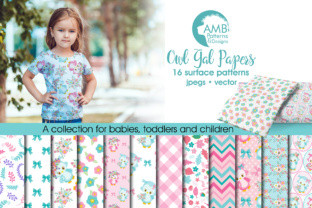
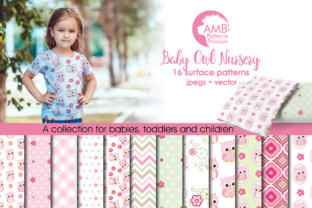
Soft pastel pinks and gentle light greens cradle delicate baby owls in Owl Nursery Papers AMB-1369 — a thoughtfully curated set of 16 high-resolution digital scrapbooking papers designed for real-world creative work. These aren’t generic clipart repeats or low-fidelity patterns. Every paper is hand-crafted with original, clean-lined owl illustrations and coordinated supporting motifs — including subtle stripes and playful dots — all color-matched to maintain visual harmony across projects.
Each design arrives as a standalone 12×12 inch JPEG at 300 dpi, ready for printing, layering, or digital assembly. That means no pixelation when scaled for large-format nursery wall art, no color shifts when printed on matte cardstock, and no layout surprises when imported into Canva, Adobe Photoshop, or Procreate. The consistency is intentional: it supports clarity, not constraint.
More Than Just “Cute” — Purpose-Built for Real Applications
What makes Owl Nursery Papers useful isn’t just its aesthetic — it’s how the palette and motif support function. Pastel pinks and light greens are developmentally soothing for infants, making these papers especially effective for nursery décor, milestone cards, and early-learning printables. But their versatility extends far beyond baby rooms.
- Invitations & Party Printables: Use the striped paper as a background for baby shower invites, then layer the dot pattern behind photo cutouts for a layered, tactile feel — even in digital format.
- Educational Resources: Teachers and homeschoolers adapt the owl motifs into flashcards, emotion charts (owls with different expressions), or counting sets — the consistent scale and clean outlines ensure legibility at small sizes.
- Small Business Branding: Boutique baby boutiques, lactation consultants, or pediatric physical therapists use the papers to build cohesive social media templates, client welcome kits, or printable growth trackers — all aligned with a calm, nurturing brand voice.
- DIY Keepsakes: Scrapbookers combine the owl papers with neutral kraft or ivory cardstock to create heirloom-quality baby books where each page feels intentional, not cluttered.
The key is restraint. Because all 16 papers share the same base palette and stylistic language, mixing them doesn’t require color correction or tone matching. You can move confidently between a full-owl-patterned background and a minimal dot border — the transition feels natural, not jarring.
Adapting Across Platforms and Audiences
Different users need different outputs — and Owl Nursery Papers supports that flexibility without compromising quality.
A freelance designer building a client’s baby boutique website might extract subtle elements — like a single owl silhouette or a repeating dot motif — and convert them into SVG icons or CSS background patterns. The original 300 dpi resolution ensures crisp rendering at any size, whether embedded in a Shopify banner or exported as a Figma component.
A blogger creating free printables for new parents could combine one owl paper as a header background and another as a footer accent in a PDF guide — then add editable text fields in Acrobat. Because the designs are JPEGs (not watermarked or layered PSDs), they integrate cleanly into standard PDF workflows.
For educators distributing materials via Google Classroom, the papers serve as engaging worksheet backgrounds — think tracing sheets with faint owl outlines, or reading logs with soft green borders. The low-contrast pastels reduce eye strain during screen-based learning, while still offering visual interest.
Staying Organized Without Sacrificing Originality
When working with 16 coordinated papers, organization matters. Start by sorting them into functional groups: full motifs (for covers or focal pages), subtle textures (stripes, dots — ideal for layering or framing), and accent papers (those with asymmetrical owl placement, useful for banners or dividers). Naming files clearly — e.g., “AMB-1369_owl-full-pink”, “AMB-1369_dots-lightgreen” — saves time later, especially when collaborating or revisiting projects months down the line.
Originality comes not from avoiding repetition, but from thoughtful reinterpretation. Try rotating a stripe paper 45 degrees to create a dynamic diagonal background. Or invert the color balance in editing software to generate a near-monochrome version — perfect for pairing with gold foil accents in premium invitations. The high-res source files give you room to experiment without degradation.
Practical Tips for Stronger Results
Here’s what experienced creators consistently do well with sets like Owl Nursery Papers:
- Test print before bulk production. Even with 300 dpi files, printer profiles vary. Run a single 5×7 test on your intended paper stock — notice how the light green reads under indoor lighting versus daylight.
- Reserve one paper as your “anchor.” Choose the most balanced owl-and-dot composition to define your core palette. Use it for headers, logos, or main backgrounds — then pull secondary colors only from other papers in the set.
- Leave breathing room. Pastel palettes invite softness, but overcrowding dilutes impact. If using a full-owl paper, pair it with generous margins and minimal typography — let the design breathe.
- Match texture to purpose. A bold stripe works for a party banner; a fine dot pattern suits delicate thank-you notes. Align visual weight with user expectations.
Finally, remember that consistency builds trust — whether you’re designing for a client’s brand, sharing resources with fellow educators, or crafting something personal for your own child’s first year. Owl Nursery Papers gives you a reliable visual foundation, so your energy stays focused on message, audience, and execution — not color calibration or motif hunting.
It’s not about filling space. It’s about choosing tools that help your ideas land clearly, respectfully, and effectively — whether that idea is a heartfelt baby announcement, a classroom tool, or a small business’s first branded asset.